Why Currency Markets Are Showing Signs of a Major Forex Disruption

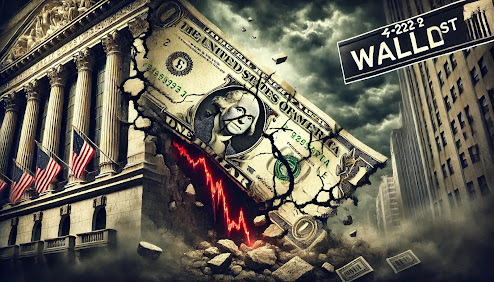
The foreign exchange (forex) market—the largest and most liquid financial arena on the planet, with a daily turnover exceeding $7.5 trillion—has long been perceived as a bastion of stability amidst global economic turbulence. Yet, in recent months, seasoned traders and central bankers alike have begun to whisper a word that once seemed unthinkable: disruption. The signs are subtle but unmistakable. From unprecedented volatility in G10 pairs to structural shifts in liquidity, the currency markets are sending a clear signal that a major forex disruption is not merely a possibility—it is a probability.
This article dissects the underlying forces driving this impending disruption, offering a professional, data-driven analysis for traders, investors, and financial professionals. We will explore the macroeconomic catalysts, technological shifts, and regulatory changes that are converging to reshape the forex landscape. By the end, you will not only understand why these disruptions are occurring but also how to position yourself to navigate—and potentially profit from—the coming storm.
The Current State of the Forex Market: Calm Before the Storm?
To appreciate the gravity of the impending disruption, one must first understand the current market dynamics. The forex market, for the better part of 2023 and early 2024, has exhibited a peculiar dichotomy:
- Record Low Volatility in Major Pairs: The EUR/USD, GBP/USD, and USD/JPY have seen 90-day implied volatility drop to levels not observed since the pre-pandemic era. This has lulled many participants into a false sense of security.
- Explosive Intraday Moves: Paradoxically, despite low historical volatility, we have witnessed flash crashes—such as the 4% plunge in the Turkish lira in a single hour and the sudden 500-pip swing in the Australian dollar during a thin liquidity session.
- Diverging Central Bank Policies: The Federal Reserve, European Central Bank, and Bank of Japan are pursuing vastly different monetary trajectories, creating deep carry trade opportunities but also systemic risk.
This environment is ripe for disruption. When volatility is compressed for too long, markets tend to snap back with ferocity—a phenomenon known as the "volatility paradox." The current calm is not a sign of health; it is a sign of accumulating pressures.
H2: The Four Pillars of the Impending Forex Disruption
Let us break down the four primary catalysts that are converging to create a "perfect storm" in the forex market.
H3: 1. Central Bank Policy Divergence: The Unwinding of the Great Synchronization
For over a decade, major central banks moved in lockstep—first with quantitative easing, then with synchronized rate hikes. That era is over. Today, we face a fragmentation of monetary policy:
- The Federal Reserve: Still hawkish, but signaling potential rate cuts in 2024. The market is pricing in three cuts, but the Fed’s dot plot suggests only one. This mismatch creates massive uncertainty.
- The European Central Bank: Trapped between stubborn inflation and a contracting Eurozone economy. The ECB has already cut rates once, but the market expects further easing. This has weakened the euro significantly.
- The Bank of Japan: The outlier. After decades of ultra-loose policy, the BOJ is finally normalizing. The carry trade—borrowing in yen at near-zero rates and investing in higher-yielding currencies—is being unwound, causing sudden yen strengthening.
- The Swiss National Bank: A surprise 25-basis-point cut in March 2024 shocked markets, signaling that deflation fears are back.
Practical Example: In March 2024, the USD/JPY pair reached 151.50, a 34-year high, before the BOJ intervened. The intervention was a direct response to the disruptive carry trade. When the yen suddenly strengthened by 4% in one day, thousands of retail traders who were short the yen were stopped out. This is a clear disruption pattern: forced liquidation and cascading stops.
H3: 2. Liquidity Fragmentation and the Rise of "Silent Flash Crashes"
Liquidity—the lifeblood of forex trading—is becoming increasingly fragmented. The traditional model of a single, deep, interbank market is giving way to a fragmented ecosystem of:
- Dark Pools: Institutional platforms where orders are hidden, reducing transparency.
- Algorithmic Liquidity Providers: HFT firms that pull liquidity at the first sign of risk.
- Retail Trading Platforms: Broker-dealers that internalize flow, creating artificial liquidity.
This fragmentation means that during moments of market stress, liquidity can evaporate in milliseconds. The result is the so-called "silent flash crash"—a sudden, violent price move that happens so fast it doesn't trigger typical circuit breakers.
Statistics to Consider: - In 2023, there were 14 recorded flash crashes in forex pairs, up from just 3 in 2019. - Average depth of market (DoM) in EUR/USD has shrunk by 30% since 2020, according to CLS data. - The bid-ask spread for the GBP/USD during Asian session hours has increased by 50% in the last two years.
Practical Example: On October 7, 2023, the USD/MXN pair crashed from 18.20 to 17.60 in 90 seconds during a low-liquidity period. No major news event triggered the move—it was simply a cascade of stop-losses hitting a thin order book. Traders who had shorted the peso were suddenly facing a 3% loss in less than two minutes.
H3: 3. Geopolitical Black Swans and De-dollarization Threats
Geopolitical risk has always influenced forex, but the nature of the threats has changed. We are no longer dealing with isolated events like Brexit or a single trade war. Instead, we face systemic shifts:
- De-dollarization: The BRICS nations (Brazil, Russia, India, China, South Africa) are actively pursuing alternatives to the USD for trade settlement. While the dollar's dominance is not under immediate threat, the perception of a shift is already causing volatility in emerging market currencies.
- Sanctions and Currency Weaponization: The freezing of Russian central bank assets in 2022 sent shockwaves through the system. Many countries (especially in Asia and the Middle East) are now diversifying reserves away from USD-denominated assets.
- Military Conflicts: The Israel-Hamas war, continued tensions in Ukraine, and the South China Sea disputes all create risk-off environments that trigger sudden capital flows into safe havens (USD, CHF, JPY) and out of riskier currencies.
Data Point: Central bank gold purchases reached a record 1,037 tonnes in 2023, surpassing the previous record set in 2022. This is a clear signal that central banks are hedging against a potential USD disruption.
H3: 4. Algorithmic Trading and the "Herding Effect"
Algorithms now account for over 70% of forex trading volume. While they provide efficiency, they also introduce a dangerous feedback loop:
- Herding: When one algorithm detects a breakout, thousands of others follow, creating exponential moves.
- Over-optimization: Many algorithms are tuned to historical patterns. When market structure changes (as it is now), these algorithms fail spectacularly.
- Correlation Breakdown: Traditional correlations (e.g., EUR/USD vs. German Bund yields) are breaking down, causing algorithms to misfire.
Practical Example: On January 15, 2024, the Swiss franc (USD/CHF) experienced a 1.5% move in 10 minutes after a series of stop-loss orders triggered a cascade. No economic data was released. The move was entirely algorithmic. Retail traders who had set tight stops were executed at prices significantly worse than their stop level—a classic disruption scenario.
H2: Practical Strategies for Navigating the Forex Disruption
Given these evolving risks, how should a professional trader or money manager adjust their approach? The following strategies are designed to mitigate risk and capitalize on disruption.
H3: 1. Embrace Optionality: Use Options and Structured Products
In a disruptive market, linear positions (spot forex) are dangerous. Instead, consider:
- Long Straddles: Buy both a call and a put at the same strike price. This profits from large moves in either direction. Ideal for upcoming central bank announcements.
- Risk Reversals: A zero-cost structure where you buy a call and sell a put (or vice versa). This allows you to express a directional view while limiting downside.
- Strangles: Similar to straddles but with out-of-the-money strikes. Lower cost but requires a larger move to profit.
Example: If you anticipate a major disruption in USD/JPY (BOJ intervention or Fed surprise), buying a 151.50/152.00 strangle expiring in one week costs about 0.5% of notional. If the pair moves 3%, the payout can be 10-15x.
H3: 2. Diversify Across Currency Corridors
Do not put all your risk in a single pair. Instead, create a basket of currencies that have low correlation to each other:
- Safe Haven Basket: USD, CHF, JPY
- Commodity Basket: AUD, CAD, NZD
- Emerging Market Basket: MXN, BRL, ZAR, INR
Why it works: A disruption in one corridor (e.g., a flash crash in USD/MXN) will not necessarily affect your other positions. This reduces portfolio volatility.
H3: 3. Tighten Risk Controls: Use Time-Based Stops and Dynamic Position Sizing
Standard stop-losses are becoming unreliable. Instead:
- Time-Based Stops: Close all positions 30 minutes before major news events (NFP, CPI, central bank decisions). This avoids the volatility spike.
- Dynamic Position Sizing: Reduce your position size during low-liquidity hours (Asian session, Friday afternoons). Use a volatility-adjusted lot size: for every 1% increase in ATR, reduce your position by 20%.
Practical Implementation: A trader who normally trades 1 standard lot (100,000 units) should reduce to 0.6 lots if the current ATR is 1.2% (versus a normal 0.8%).
H3: 4. Monitor the "Disruption Indicators"
Create a dashboard of real-time indicators that signal impending disruption:
- Bid-Ask Spread: If EUR/USD spread widens from 0.5 pips to 1.5 pips, that is a warning.
- Volume Profile: A sudden drop in volume (below the 20-period moving average) often precedes a violent move.
- VIX Correlation: When the VIX (equity volatility) rises above 25, USD typically strengthens. Watch for divergences.
- Central Bank Communication: Bank of Japan officials giving verbal warnings? Fed minutes showing dissent? These are red flags.
H2: The Role of Technology in Mitigating Disruption
While algorithms are part of the problem, they can also be part of the solution. Advanced traders are leveraging:
- Machine Learning for Pattern Recognition: AI models can detect early signs of a flash crash (e.g., order book imbalance, rapid time-sales) and exit positions faster than any human.
- Smart Order Routing (SOR): Instead of sending all orders to one liquidity provider, SOR algorithms scan multiple venues to find the best price, reducing slippage during disruptions.
- Automated Hedging: Systems that dynamically hedge forex exposure using options or futures, ensuring that directional risk is capped.
Data Point: A study by the Bank for International Settlements (BIS) found that firms using SOR experienced 40% less slippage during the 2023 Swiss franc volatility event.
Conclusion: Key Takeaways for the Professional Trader
The forex market is not breaking; it is evolving. The disruption we are witnessing is not a temporary anomaly but a structural shift driven by:
- Central Bank Policy Divergence: The end of synchronized easing/ tightening creates unpredictable carry trade dynamics.
- Liquidity Fragmentation: Shrinking market depth makes flash crashes more frequent and severe.
- Geopolitical Risk: De-dollarization and reserve diversification are changing long-term currency correlations.
- Algorithmic Herding: Over-optimized trading systems amplify volatility in unexpected ways.
Actionable Steps
- For Day Traders: Reduce position sizes by 30-50% during low-liquidity hours. Use time-based stops. Focus on pairs with deep liquidity (EUR/USD, USD/JPY).
- For Swing Traders: Use options strategies (straddles, strangles) to profit from volatility expansion rather than directional bets.
- For Institutional Managers: Diversify across currency corridors. Implement machine learning for early warning systems. Hedge tail risk using out-of-the-money options.
- For All Traders: Monitor the disruption indicators (spread, volume, VIX) daily. Do not ignore the signs.
The Bottom Line
The signals are flashing yellow. The forex market is showing signs of a major disruption—one that will separate the prepared from the unprepared. By understanding the underlying forces, adopting flexible trading strategies, and using technology to your advantage, you can not only survive this disruption but thrive in it. The market is not your enemy; it is your teacher. Listen carefully.
Disclaimer: This article is for educational and informational purposes only and does not constitute financial advice. Forex trading carries substantial risk and is not suitable for all investors. Always consult with a qualified financial advisor before making any trading decisions.


Comments
Post a Comment