Could a Single Cyber Attack Disrupt Entire Economies Overnight

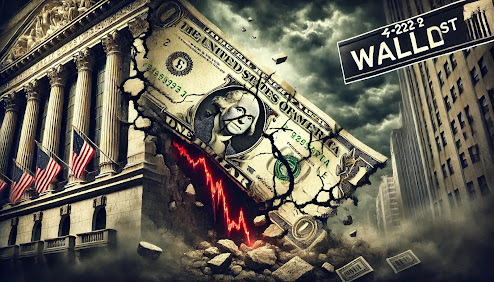
In the early hours of a seemingly ordinary Tuesday, the world wakes up to chaos. Stock exchanges in New York, London, Tokyo, and Frankfurt freeze simultaneously. ATMs in major cities spew error messages while credit card transactions fail globally. Power grids in several nations flicker and collapse, plunging millions into darkness. Oil refineries halt operations. Air traffic control systems go silent, grounding thousands of flights. Grocery store shelves remain empty because supply chains have evaporated into digital ether.
This scenario isn't the premise of a dystopian novel—it's a plausible projection based on current geopolitical tensions and technological vulnerabilities. The question isn't if such an attack could happen, but when—and whether we are prepared for the economic cataclysm that would follow.
In this comprehensive analysis, we'll dissect the mechanics of a catastrophic cyber attack, examine real-world precedents that serve as grim warnings, and explore the cascading consequences that could unravel global financial systems in a single night.
The Anatomy of a Systemically Destructive Cyber Attack
To understand how a single cyber attack could disrupt entire economies, we must first grasp the interdependencies that define modern infrastructure. Our financial systems, energy grids, transportation networks, and communication platforms are no longer isolated entities—they are interconnected nodes in a fragile digital ecosystem.
The Target: Payment and Settlement Systems
At the heart of every modern economy lies the financial plumbing that processes trillions of dollars daily. Central banks rely on Real-Time Gross Settlement (RTGS) systems to transfer funds between commercial banks. The Federal Reserve's Fedwire, the European Central Bank's TARGET2, and Japan's BOJ-NET are critical nodes.
A coordinated attack that corrupts these systems could: - Freeze interbank lending: Banks would be unable to settle overnight loans, triggering a liquidity crisis. - Disable clearing houses: Derivatives markets, stock exchanges, and bond trading would halt. - Corrupt transaction records: Banks would lose trust in their own ledgers, causing a complete loss of credit.
In 2016, cyber criminals stole $81 million from Bangladesh's central bank by compromising SWIFT—the global messaging network banks use for cross-border payments. While that attack was limited in scope, imagine a scenario where SWIFT itself is compromised, enabling fraudulent transfers across hundreds of institutions simultaneously.
The Energy Grid: The Economy's Achilles' Heel
Electricity is the oxygen of modern civilization. Without it, data centers go dark, factories idle, hospitals lose critical care systems, and water treatment plants stop functioning. A cyber attack targeting the US power grid could disrupt 93% of the population for weeks or months, according to a 2019 report by the US Department of Energy.
The 2015 and 2016 cyber attacks on Ukraine's power grid, attributed to Russian state-sponsored hackers, demonstrated that sophisticated adversaries can already manipulate industrial control systems remotely. Those attacks caused regional blackouts, but a similar strike on a larger scale—targeting the US Eastern Interconnection or the European Continental Synchronous Area—would trigger economic ripple effects measured in trillions of dollars.
Supply Chain Paralysis: The Invisible Engine
Modern supply chains operate on just-in-time principles, where inventory is minimized to reduce costs. This efficiency creates fragility. A cyber attack that disables a major port, such as Rotterdam, Shanghai, or Los Angeles, could idle factories globally within days.
The 2021 Colonial Pipeline ransomware attack showed how a single pipeline closure caused fuel shortages across the US Southeast. Now extrapolate that to a coordinated attack on multiple logistics hubs: maritime shipping platforms (like Maersk's systems, which were crippled by the NotPetya malware in 2017), rail signaling systems, or major trucking dispatch networks.
The economic cost of such an event would cascade through every sector: - Manufacturing: Parts shortages halt production lines. - Retail: Shelves empty as replenishment stops. - Healthcare: Critical medicines become unavailable. - Agriculture: Fertilizer and feed supplies disrupted.
Historical Precedents: The Warnings We Ignored
While we haven't yet experienced a catastrophic cyber attack on the scale described, several events provide clear evidence of the danger.
The 2017 NotPetya Attack
NotPetya started as a targeted attack on Ukrainian companies but quickly spread globally via compromised software updates. It was the most destructive cyber attack in history, causing estimated losses of over $10 billion.
Impact on economic sectors: - Shipping: Maersk, the world's largest container shipping company, lost ability to process orders for 10 days, disrupting global supply chains. - Pharmaceuticals: Merck reported production stoppages, leading to shortages of vaccines. - Food: Mondelez International suffered production outages at chocolate factories.
Critical lesson: NotPetya was not designed to maximize economic damage—its primary goal was to disrupt Ukraine. Yet it still caused billions in losses across industries worldwide. A deliberate attack targeting financial infrastructure or energy grids could dwarf this.
The 2020 SolarWinds Compromise
The SolarWinds attack involved inserting malicious code into a trusted software update, compromising thousands of organizations including US federal agencies, Fortune 500 companies, and technology firms.
Economic implications: - Loss of intellectual property: Estimated billions in stolen trade secrets and research data. - Breach of classified systems: Compromised security clearances disrupted government operations. - Reputational damage: Affected companies saw stock price declines and loss of customer trust.
Critical lesson: The attack demonstrated that state-sponsored actors can infiltrate high-value targets without detection for months. If adversaries can insert backdoors into critical financial systems, they could trigger a market crash at their chosen moment.
The 2021 Colonial Pipeline Ransomware Attack
This attack forced the shutdown of the largest fuel pipeline system in the United States for six days. The immediate effects included:
- Gas shortages: Up to 8,000 stations ran out of fuel across 17 states.
- Price spikes: Average gasoline prices rose 20 cents per gallon.
- Airline disruptions: Delta Air Lines briefly grounded flights due to fuel supply concerns.
- Hoarding behavior: Panic buying caused artificial scarcity.
Economic cost: Estimates range from $4.4 million to $90 million in direct ransom paid, but indirect losses to the broader economy exceeded $1 billion.
Critical lesson: A single pipeline serving the East Coast caused national-level disruption. An attack on a major financial exchange or central bank clearing system would be orders of magnitude more severe.
The Cascading Economic Effects: From Digital to Physical
A cyber attack of sufficient scale would not remain confined to the digital realm. The economic consequences would cascade through multiple channels, creating feedback loops that amplify damage.
Phase 1: Immediate Liquidity Crisis
Within hours of a successful attack on payment systems, the interbank lending market would freeze. Banks would be unable to verify counterparty solvency, leading to a refusal to extend credit. This would replicate the conditions of the 2008 financial crisis, but without the tools central banks used to stabilize markets (like digital transfers).
Real-world example: In 2022, a software glitch at the Bank of Korea disrupted its RTGS system for two hours, creating short-term volatility. A 48-hour outage would force banks to halt all transactions.
Phase 2: Market Collapse
Stock exchanges would suspend trading to prevent panic selling. However, this pause would not prevent investors from seeking liquidity elsewhere. Futures markets and commodities exchanges would also freeze, preventing price discovery.
Historical parallel: During the 2010 Flash Crash, the Dow Jones Industrial Average dropped 1,000 points in 36 minutes. That was a temporary algorithmic anomaly. A deliberate attack could trigger a sustained, global sell-off.
Phase 3: Physical Infrastructure Breakdown
Without functioning payment systems, supply chains would halt: - Fuel: Gas stations cannot process credit cards. Tanker trucks cannot schedule deliveries. - Food: Grocery stores cannot restock. Refrigerated warehouses lose inventory. - Healthcare: Hospitals cannot purchase medications or pay staff. - Transportation: Airlines cannot book flights. Public transit systems shut down.
Phase 4: Social Unrest
Economic collapse begets social breakdown. Historical examples from the 2008 crisis to the 2020 COVID-19 pandemic show that sudden unemployment, food shortages, and loss of savings can trigger: - Protests and riots: As happened in Greece and Argentina during economic crises. - Political instability: Governments may be toppled. - Migration pressures: People flee affected regions.
Phase 5: Long-term Structural Damage
Even after systems are restored, the recovery would be measured in months or years: - Loss of trust: Investors and consumers would be reluctant to return to digital systems. - Litigation: Trillions in claims against insurance companies, banks, and technology providers. - Regulatory overhaul: Governments would impose costly new compliance requirements. - Geopolitical tensions: Attribution of the attack could lead to military retaliation.
Why This Is More Likely Than You Think
Experts have been warning about systemic cyber risk for years, but several factors increase the probability of a catastrophic event:
1. Critical Infrastructure Is Underfunded
Despite repeated warnings, many utilities and transportation systems still rely on obsolete software. The US electric grid, for example, uses equipment designed in the 1970s with minimal cybersecurity protection. A 2022 Inspector General report found that 40% of US power distribution systems had "critical" vulnerabilities.
2. Geopolitical Tensions Are Rising
Nations are increasingly using cyber capabilities as a tool of coercion: - China: State-backed groups target US energy and financial sectors. - Russia: Military intelligence (GRU) has conducted attacks on Ukraine, US elections, and European infrastructure. - Iran: Proxies target Israeli water systems, Saudi oil facilities, and US banks. - North Korea: Hacker groups steal billions to fund weapons programs.
The risk of escalation from espionage to outright economic warfare is real.
3. AI Is Democratizing Attack Capabilities
Artificial intelligence lowers the barrier to entry: - Automated vulnerability discovery: AI tools can scan systems for weaknesses faster than human teams. - Deepfake impersonation: Voice and video deepfakes can trick executives into authorizing fraudulent transfers. - Smart malware: AI-powered viruses can adapt to defenses in real-time.
4. Cloud Concentration Risk
Most financial services have migrated to cloud providers like Amazon Web Services, Microsoft Azure, and Google Cloud. A successful attack on these platforms would affect thousands of institutions simultaneously. In 2021, a network outage at AWS lasted 14 hours, affecting banks, airlines, and streaming services globally.
5. Zero-Day Vulnerabilities Are Being Stockpiled
Nations and criminal groups hoard undiscovered vulnerabilities (zero-days) for maximum impact. The Shadow Brokers leak in 2016 revealed that the US National Security Agency had tools capable of compromising major banking software. Such tools, once leaked, can be used by anyone.
Who Would Be Affected Most?
Not all economies are equally vulnerable. A cyber attack would disproportionately affect:
Highly Digitized Economics
Countries like the United States, United Kingdom, Japan, and South Korea have deeply integrated digital systems. While their cybersecurity defenses are stronger, the potential damage is larger because more processes rely on interconnected networks.
Example: A 2022 study found that a 10-day cyber attack on the US financial system could cause a 20% GDP contraction, equivalent to $8 trillion.
Emerging Markets with Fragile Infrastructure
Nations in Southeast Asia, Latin America, and Africa often have less robust backup systems. Their banks and utilities may not have redundant data centers, and central banks lack the ability to issue emergency liquidity without functioning payment networks.
Example: In 2020, a ransomware attack on Costa Rica's government systems paralyzed tax collection, customs, and social services for months, causing $500 million in economic losses.
Countries Dependent on a Single Industry
Nations whose economies rely on a single commodity or service are vulnerable to targeted attacks: - Oil producers (Saudi Arabia, Russia, Nigeria): Attacks on refineries or pipelines. - Tourism-dependent (Thailand, Greece, Maldives): Disruption of booking systems. - Financial hubs (Switzerland, Singapore, Hong Kong): Attacks on banks or stock exchanges.
Populations Already in Crisis
Vulnerable groups would suffer disproportionately: - Low-income households: Lack savings to weather job losses. - Elderly: Dependence on electronic pension disbursements. - Rural communities: Fewer alternative options for essential services. - Small businesses: Cannot survive weeks without revenue.
Mitigation Strategies: Can We Prevent the Inevitable?
While we cannot eliminate the risk, we can reduce both the probability and the impact of a catastrophic cyber attack.
1. Strengthen Critical Infrastructure
- Mandate minimum security standards: Regulate utilities, banks, and transportation companies to adopt best practices like multi-factor authentication, air-gapped backup systems, and regular penetration testing.
- Increase funding: Allocate federal resources to modernize aging systems. The US Infrastructure Investment and Jobs Act allocated $1 billion for grid security, but experts say $10 billion annually is needed.
- Create redundancy: Require backup systems that can operate offline or in isolation.
2. Improve Information Sharing
- Public-private partnerships: Establish real-time threat intelligence sharing between governments and private sector entities.
- Cyber incident response teams: Pre-position response teams to quickly contain attacks.
- Global cooperation: Nations must agree on norms of behavior in cyberspace, including consequences for economic attacks.
3. Develop Systemic Resilience
- Central bank digital currencies (CBDCs): These could provide alternative payment rails if commercial systems fail.
- Pre-position cash reserves: Ensure that ATMs and banks have enough physical currency to survive a week of digital disruption.
- Emergency liquidity facilities: Central banks should have the ability to issue emergency loans without relying on digital verification.
4. Conduct Realistic Simulation Exercises
Large-scale exercises like the NATO "Locked Shields" drills are essential. However, they must include: - Cross-sector participation: Not just military but also banks, utilities, and transportation. - Economic modeling: Predict the cascading effects of different attack scenarios. - Public communication: Test how to inform citizens without causing panic.
5. Strengthen International Law
The United Nations' Group of Governmental Experts has proposed norms prohibiting attacks on critical infrastructure. However, enforcement is weak. Nations should: - Establish clear attribution: Use technical and intelligence capabilities to identify attackers. - Impose economic sanctions: Target nations that harbor or sponsor cyber criminals. - Create a cyber court: International tribunal to adjudicate state-sponsored attacks.
Conclusion: The Clock Is Ticking
The question is not whether a single cyber attack could disrupt entire economies overnight—the evidence overwhelmingly says yes. We have already seen the precursors: the NotPetya attack that shut down global shipping, the SolarWinds breach that compromised national security, and the Colonial Pipeline shutdown that caused regional fuel crises.
What we lack is not the technical capability to defend ourselves, but the will to act before it's too late. The digital systems that power modern economies were designed for efficiency and speed, not resilience. We have built a house of cards on a foundation of sand.
Key Takeaways:
-
Systemic risk is real: A coordinated attack on financial payment systems, energy grids, or supply chains could cause trillions in losses within days.
-
The damage cascades: Digital disruption quickly becomes physical crisis, leading to liquidity freezes, market crashes, infrastructure failures, and social unrest.
-
Vulnerability is uneven: Highly digitized economies face the greatest potential damage, while emerging markets and vulnerable populations pay the highest price.
-
Prevention is possible: With investment in infrastructure, international cooperation, and realistic preparedness exercises, we can significantly reduce the risk.
-
Complacency is the enemy: Every day we delay action increases the probability of a catastrophic event. The attackers are patient, well-funded, and determined.
Final thought: In an interconnected world, the cost of a single cyber attack is measured not just in dollars, but in lives disrupted, trust destroyed, and stability lost. We must treat this threat with the urgency it demands—before a sleepless Tuesday becomes a reality we cannot undo.
This article was published on bullseyefx.com. For more insights on cybersecurity, economic resilience, and geopolitical risk, subscribe to our newsletter.


Comments
Post a Comment